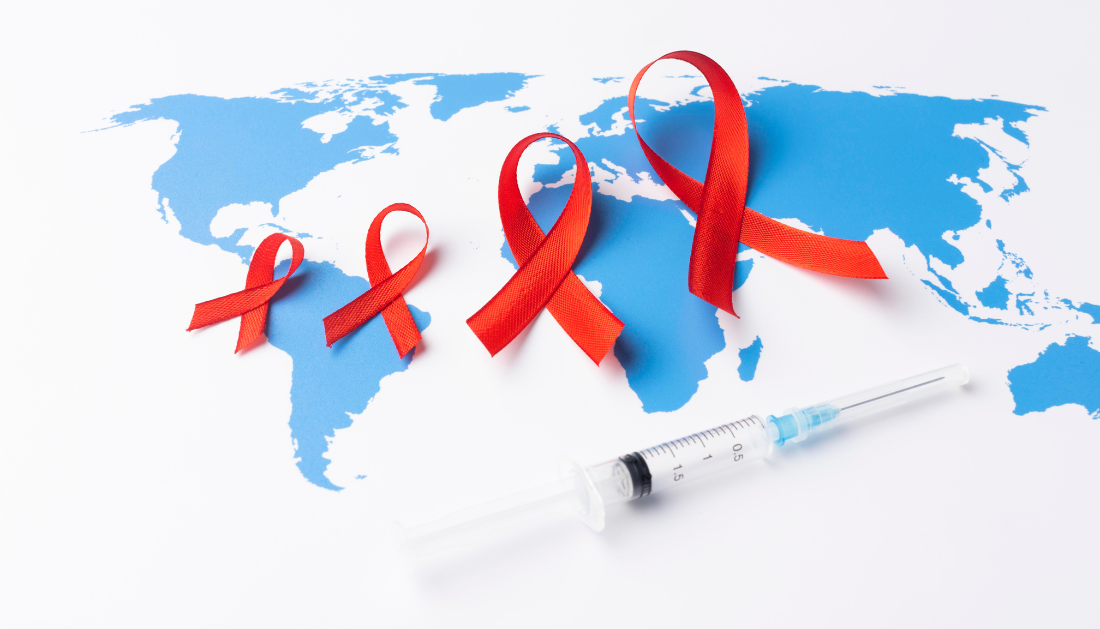
Twice-Yearly Lenacapavir for HIV Prevention in Men and Gender-Diverse Persons

A recent clinical trial on led by Emory University and Grady Health System has revealed a breakthrough in HIV prevention. The study found that a twice-yearly injection of Lenacapavir reduced the risk of HIV infection by an impressive 96%, significantly outperforming the traditional daily oral PrEP (pre-exposure prophylaxis) medication, such as Truvada. These findings, published in the New England Journal of Medicine, highlight the potential of long-acting injectables in HIV prevention, particularly for individuals who face challenges with medication adherence to daily oral drugs.
While daily oral PrEP, like Truvada, has proven effective in preventing HIV, its success relies heavily on consistent use. Studies show that many individuals struggle to take their medication daily, leading to reduced effectiveness. In contrast, the Lenacapavir injection only requires administration twice a year, offering a more manageable alternative for patients, especially those who have difficulty accessing healthcare or maintaining oral medication adherence.
In the Phase III trial, 99% of participants in the Lenacapavir group remained HIV-negative, compared to 99% of those using Truvada. Among the 2,179 participants in the Lenacapavir group, only two acquired HIV infections, while the Truvada group saw nine new infections among 1,086 participants. This impressive efficacy underscores the potential of the injectable treatment to provide greater protection, even in diverse populations that may face barriers to consistent medication use.
The study’s focus on racial, ethnic, and gender-diverse participants was crucial, as these populations are disproportionately affected by HIV and often have limited access to prevention methods like PrEP. The trial took place at 88 sites across multiple countries, including the U.S., South Africa, and Brazil, ensuring representation of those who would benefit most from an injectable option. The results highlight the urgent need for new, accessible HIV prevention methods, particularly for individuals in underserved communities.
With the FDA set to review Lenacapavir for commercial use in 2025, healthcare professionals are hopeful that this innovative solution will become a game changer in the fight against HIV, offering a powerful tool for individuals who have struggled with daily oral PrEP medication adherence. The future of HIV prevention looks promising, and Lenacapavir may play a key role in reducing new infections, both in the U.S. and globally.
More information: Colleen Kelley, et al. Twice-Yearly Lenacapavir for HIV Prevention in Men and Gender-Diverse Persons, New England Journal of Medicine (2024). DOI: 10.1056/NEJMoa2411858

 Gamma Oscillations Restored in Alzheimer’s Disease Mice
Key takeaways Researchers restored parvalbumin (PV).
 Coffee Consumption Linked to Lower Recurrent VTE Risk
Key points at a glance Study.
 Body Roundness Index Linked to Higher Heart Attack Risk
Key findings at a glance Study.
 Maternal Diet Fails to Reduce Infant Egg and Peanut Allergy
Key Points A large Australian randomized.
 Visual Impairment Linked to Higher Dementia Risk
Key findings at a glance A.
 Long-Acting HIV Treatment May Help Drug-Resistant Cases
Key Takeaways A UCSF study found.
 Night Shift Work Alters Key Circadian Gene Expression
A recent study published in Frontiers.
 Tirzepatide Weight Loss: Fat Mass and Muscle Findings
Key points Tirzepatide was associated with.
 Coffee and Gut Microbiome: Brewing and Metabolic Effects
Key Points Coffee contains caffeine, chlorogenic.
 Low-Dose Radiation Therapy Shows Promise in Early Knee OA
Key Points Low-dose radiation therapy was.
Leave a Comment