Image by Freepik

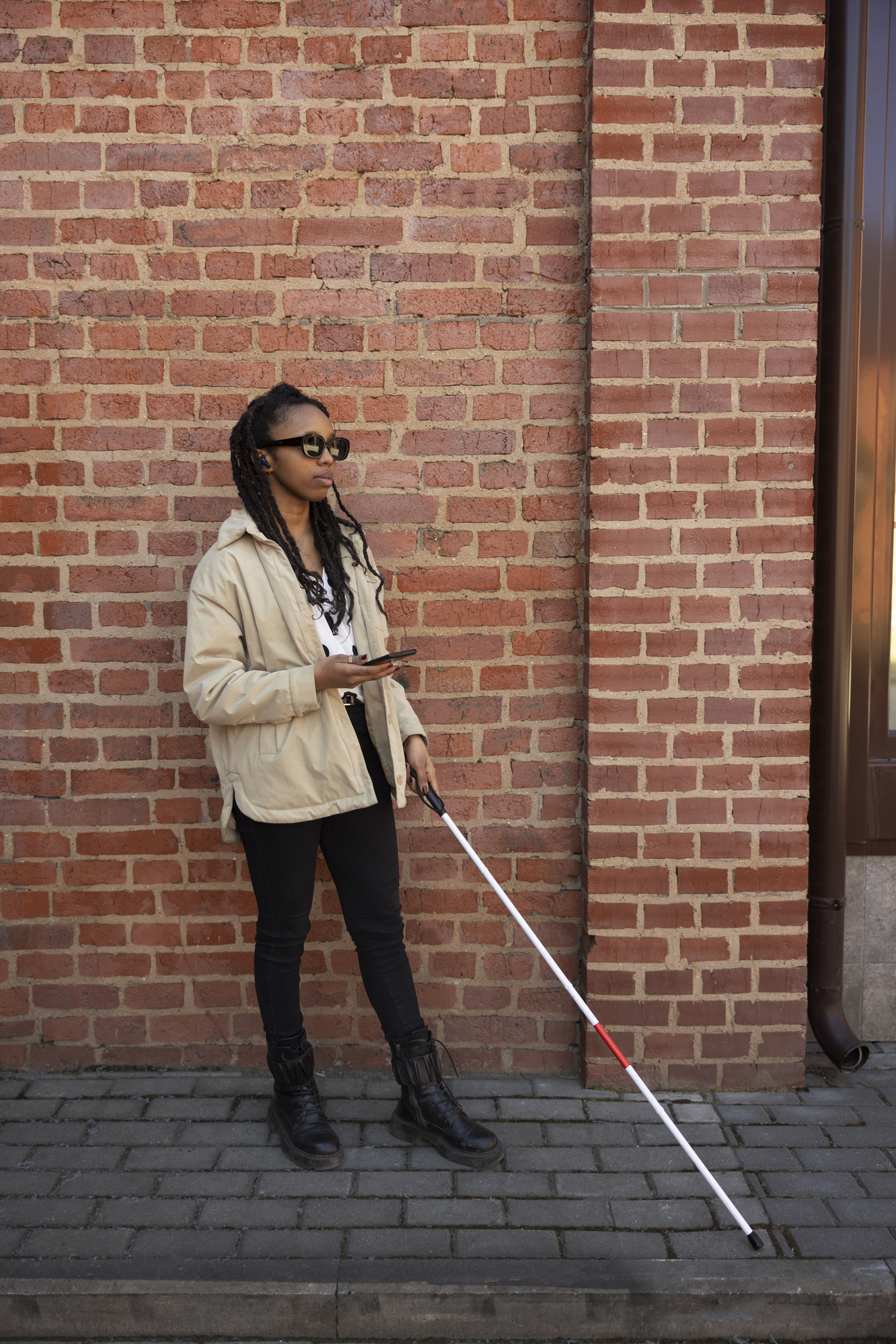
According to a study conducted by scientists at the Karolinska Institutet in Sweden and Jagiellonian University in Poland, blind persons can detect their own heartbeats more accurately than sighted people. According to the study, blindness increases one’s capacity for internal body signals. The Journal of Experimental Psychology: General has published the findings.
Without measuring their pulse or touching their bodies, 36 blind and equal numbers of sighted people were asked to count their own heartbeats. Using a pulse oximeter, the researchers simultaneously captured the subjects’ actual heartbeats. To determine how well the individuals could feel their own heartbeats, they then compared the reported and recorded statistics. The results revealed that the blind participants had better heartbeat detection than the sighted participants. On a scale where 1.0 was the highest possible score, the average accuracy for the blind group was 0.78 and for the sighted group, it was 0.63.
“The blind participants were much better at counting their own heartbeats than the sighted participants in our study and in several previous studies,” says Dominika Radziun, Ph.D. student at the Department of Neuroscience, Karolinska Institutet. “It gives us important information about the brain’s plasticity and how the loss of one sense can enhance others, in this case the ability to feel what happens inside your own body.”
The researchers hypothesize that this capacity for heartbeat detection may be advantageous for processing emotions. Previous research has demonstrated a relationship between the degree of interoceptive accuracy—the capacity to accurately assess one’s own and other people’s emotional states—and perceptional skill.
“We know that heart signals and emotions are closely interlinked; for example, our hearts beat faster when we experience fear. It is possible that blind individuals’ enhanced sensitivity to signals from their own heart also impacts their emotional experiences,” says Dominika Radziun.
The research team will now continue to investigate how blind people experience their own bodies, looking for anatomical alterations in the visual cortex, the area of the brain ordinarily in charge of vision, that could account for the improved sensitivity to impulses from inside the body.

 Brain-Computer Interface Uses EEG in Unresponsive Patients
Key findings at a glance Mind-controlled.
 Gamma Oscillations Restored in Alzheimer’s Disease Mice
Key takeaways Researchers restored parvalbumin (PV).
 Coffee Consumption Linked to Lower Recurrent VTE Risk
Key points at a glance Study.
 Body Roundness Index Linked to Higher Heart Attack Risk
Key findings at a glance Study.
 Maternal Diet Fails to Reduce Infant Egg and Peanut Allergy
Key Points A large Australian randomized.
 Visual Impairment Linked to Higher Dementia Risk
Key findings at a glance A.
 Long-Acting HIV Treatment May Help Drug-Resistant Cases
Key Takeaways A UCSF study found.
 Night Shift Work Alters Key Circadian Gene Expression
A recent study published in Frontiers.
 Tirzepatide Weight Loss: Fat Mass and Muscle Findings
Key points Tirzepatide was associated with.
 Coffee and Gut Microbiome: Brewing and Metabolic Effects
Key Points Coffee contains caffeine, chlorogenic.
Leave a Comment