Image by Freepik

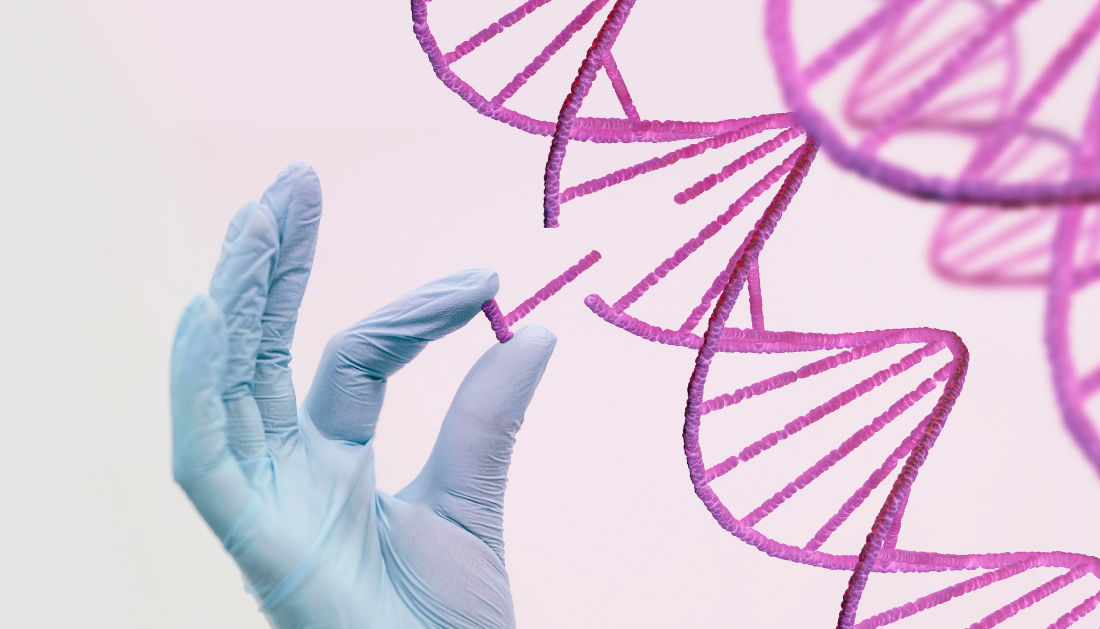
When a woman is diagnosed with breast cancer, the tough choice of which form of treatment to pursue emerges. Doctors employ gene expression testing to assist them create a forecast about the course of the disease and, based on that, choose an appropriate medication. The reliability of these tests, however, has not been thoroughly confirmed. Leipzig University and the Pathologie Hamburg-West institute employed machine learning to analyze enormous amounts of data on this subject and discovered that gene expression signatures offer a high degree of certainty in prognosis, but not perfect certainty.
Gene expression signatures are detailed descriptions of gene activity patterns. These signatures can be used to forecast how tumors will form when a person is diagnosed with cancer. As such, they are critical for differentiating cancer types, determining prognosis, and outlining therapy methods.
The current study, led by Dimitrij Tschodu, a doctoral researcher at Leipzig University’s Peter Debye Institute for Soft Matter Physics, was conducted in close collaboration with Professor Axel Niendorf of the Pathologie Hamburg-West institute and was recently published in the prestigious journal Scientific Reports. Tschodu and his colleagues thoroughly assessed the predictive capacity of around 10,000 signals based on renowned breast cancer databases using various machine learning algorithms.
The study’s findings suggest that the gene expression signatures evaluated lead to a proper patient prognosis in less than 80% of situations. The researchers also point out that prognoses based solely on gene expression signatures account for less than half of the theoretically accessible information. As a result, they advise employing other factors in addition to gene expression tests. “Although our results confirm the importance of gene expression signatures in predicting patient prognosis, they also highlight the urgent need for a holistic approach that takes into account molecular, clinical, histological and other complementary factors to ensure an accurate prognosis,” Tschodu said.
Need for a holistic approach to prognosis
“The results of this study are crucial for understanding the limitations of gene expression signatures in cancer prognosis,” adds Professor Josef Käs, head of the Soft Matter Physics Division at Leipzig University. “While gene expression signatures are undoubtedly valuable, our findings show that a holistic approach is needed to ensure an accurate prognosis and to make informed decisions about treatment.”
The publication comes from the Physics of Cancer research field, which looks at cancer from a physical perspective and also examines the mechanics of cells and tissues. Käs says: “This new study underlines the importance of the ‘Physics of Cancer’ in the medical field and the need for interdisciplinary collaboration to find innovative solutions to the challenges in cancer treatment.” Only recently, a research group led by Professor Käs and Professor Niendorf published new findings in this field that could promote more precise diagnostics of the spread and formation of metastases in breast tumours.

 Gamma Oscillations Restored in Alzheimer’s Disease Mice
Key takeaways Researchers restored parvalbumin (PV).
 Coffee Consumption Linked to Lower Recurrent VTE Risk
Key points at a glance Study.
 Body Roundness Index Linked to Higher Heart Attack Risk
Key findings at a glance Study.
 Maternal Diet Fails to Reduce Infant Egg and Peanut Allergy
Key Points A large Australian randomized.
 Visual Impairment Linked to Higher Dementia Risk
Key findings at a glance A.
 Long-Acting HIV Treatment May Help Drug-Resistant Cases
Key Takeaways A UCSF study found.
 Night Shift Work Alters Key Circadian Gene Expression
A recent study published in Frontiers.
 Tirzepatide Weight Loss: Fat Mass and Muscle Findings
Key points Tirzepatide was associated with.
 Coffee and Gut Microbiome: Brewing and Metabolic Effects
Key Points Coffee contains caffeine, chlorogenic.
 Low-Dose Radiation Therapy Shows Promise in Early Knee OA
Key Points Low-dose radiation therapy was.
Leave a Comment