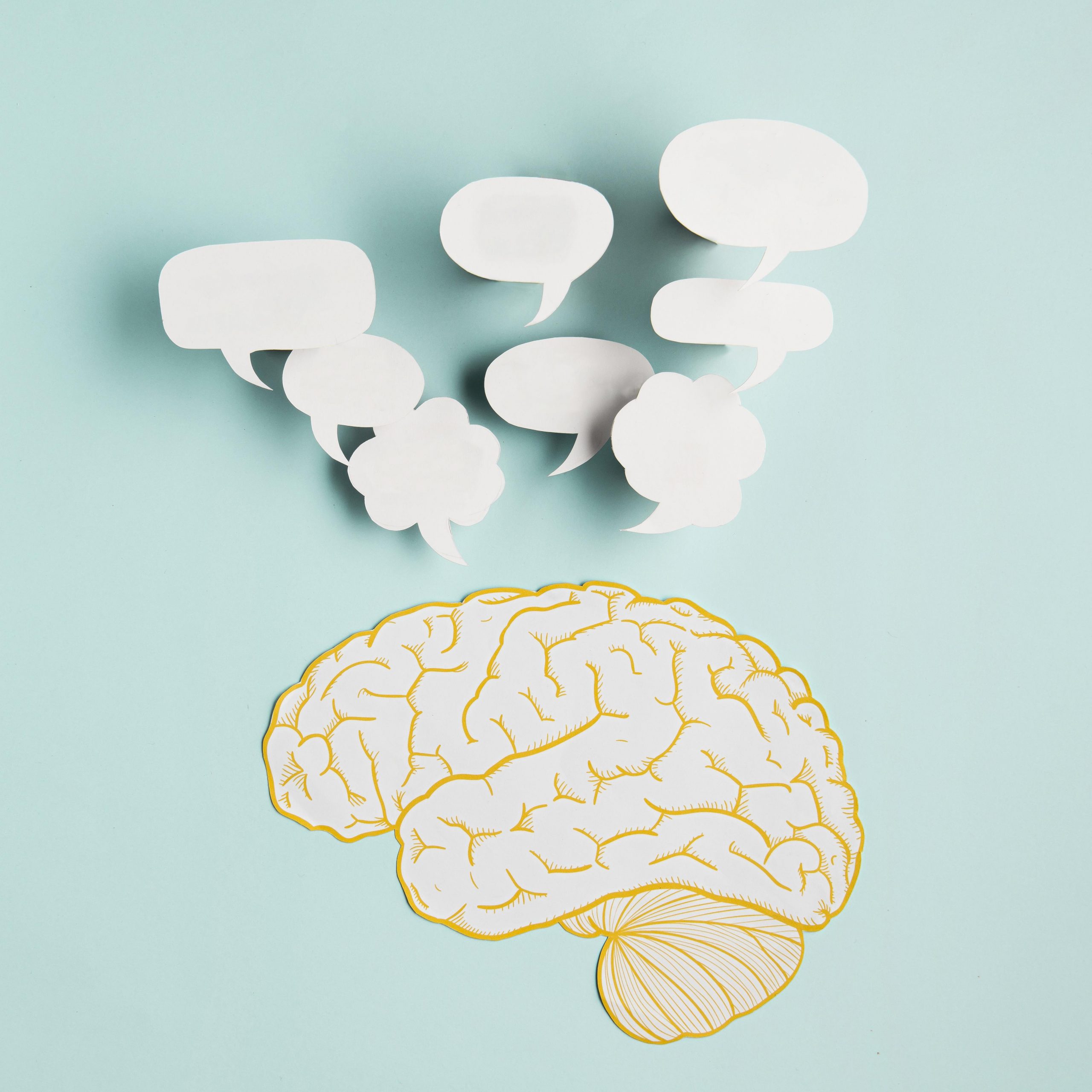
Image by Freepik

Scientists hailing from Radboud University and the UMC Utrecht have achieved a remarkable feat – the conversion of brain signals into audible speech. Through the intricate interplay of implants and advanced artificial intelligence, they proficiently deciphered brain signals, enabling them to accurately anticipate individuals’ intended speech at an impressive rate of 92%–100%. Their groundbreaking discoveries have been formally documented in the esteemed Journal of Neural Engineering.
These pioneering efforts usher in a promising era within the realm of Brain-Computer Interfaces. As articulated by lead researcher Julia Berezutskaya, an esteemed member of Radboud University’s Donders Institute for Brain, Cognition, and Behaviour, alongside the UMC Utrecht, this research constitutes a significant stride forward. Ingeniously utilizing brain implants among epilepsy patients, Berezutskaya and her cohorts adeptly extrapolated the content of people’s verbalizations.
“Ultimately, we hope to make this technology available to patients in a locked-in state, who are paralyzed and unable to communicate,” says Berezutskaya. “These people lose the ability to move their muscles, and thus to speak. By developing a brain-computer interface, we can analyze brain activity and give them a voice again.”
In pursuit of their recent study, the scientists orchestrated an experiment involving individuals without paralysis who bore temporary brain implants. These participants were prompted to articulate an array of words aloud, while having their cerebral processes meticulously recorded the entire time.
Berezutskaya says, “We were then able to establish direct mapping between brain activity on the one hand, and speech on the other hand. We also used advanced artificial intelligence models to translate that brain activity directly into audible speech. That means we weren’t just able to guess what people were saying, but we could immediately transform those words into intelligible, understandable sounds. In addition, the reconstructed speech even sounded like the original speaker in their tone of voice and manner of speaking.”
Across the globe, researchers are ardently engaged in deciphering linguistic expressions and complete sentences encoded within brain patterns. Remarkably, this team of researchers achieved the feat of reconstituting coherent speech patterns using relatively modest datasets. This accomplishment underscores the capacity of their models to unveil the intricate correlation existing between brain dynamics and spoken language, even when confronted with limited information.
Of paramount importance, the researchers complemented their work by enlisting volunteers for auditory assessments, gauging the perceptibility of the artificially synthesized words. Encouragingly, the affirmative outcomes derived from these evaluations affirm the technology’s proficiency in accurate word recognition and highlight its prowess in effectively conveying these words audibly and comprehensibly, mirroring the qualities of genuine human speech.
“For now, there’s still a number of limitations,” warns Berezutskaya. “In these experiments, we asked participants to say twelve words out loud, and those were the words we tried to detect. In general, predicting individual words is less complicated than predicting entire sentences. In the future, large language models that are used in AI research can be beneficial.”
“Our goal is to predict full sentences and paragraphs of what people are trying to say based on their brain signals and activity alone. To get there, we’ll need more experiments, more advanced implants, larger datasets and advanced AI models. All these processes will still take a number of years, but it looks like we’re heading in the right direction.”

 Visual Impairment Linked to Higher Dementia Risk
Key findings at a glance A.
 Long-Acting HIV Treatment May Help Drug-Resistant Cases
Key Takeaways A UCSF study found.
 Night Shift Work Alters Key Circadian Gene Expression
A recent study published in Frontiers.
 Tirzepatide Weight Loss: Fat Mass and Muscle Findings
Key points Tirzepatide was associated with.
 Coffee and Gut Microbiome: Brewing and Metabolic Effects
Key Points Coffee contains caffeine, chlorogenic.
 Low-Dose Radiation Therapy Shows Promise in Early Knee OA
Key Points Low-dose radiation therapy was.
 Oral Hormone Replacement Therapy Raises Blood Clot Risk
Key Points Oral hormone replacement therapy.
 GLP-1 Health Information: Quality, Completeness, & Engagement
Key Points A study assessed 128.
 DNA Damage Response May Drive Biological Aging
Key Points Chronic DNA damage response.
 Maternal Diet Fails to Reduce Infant Egg and Peanut Allergy
Key Points A large Australian randomized.
Leave a Comment