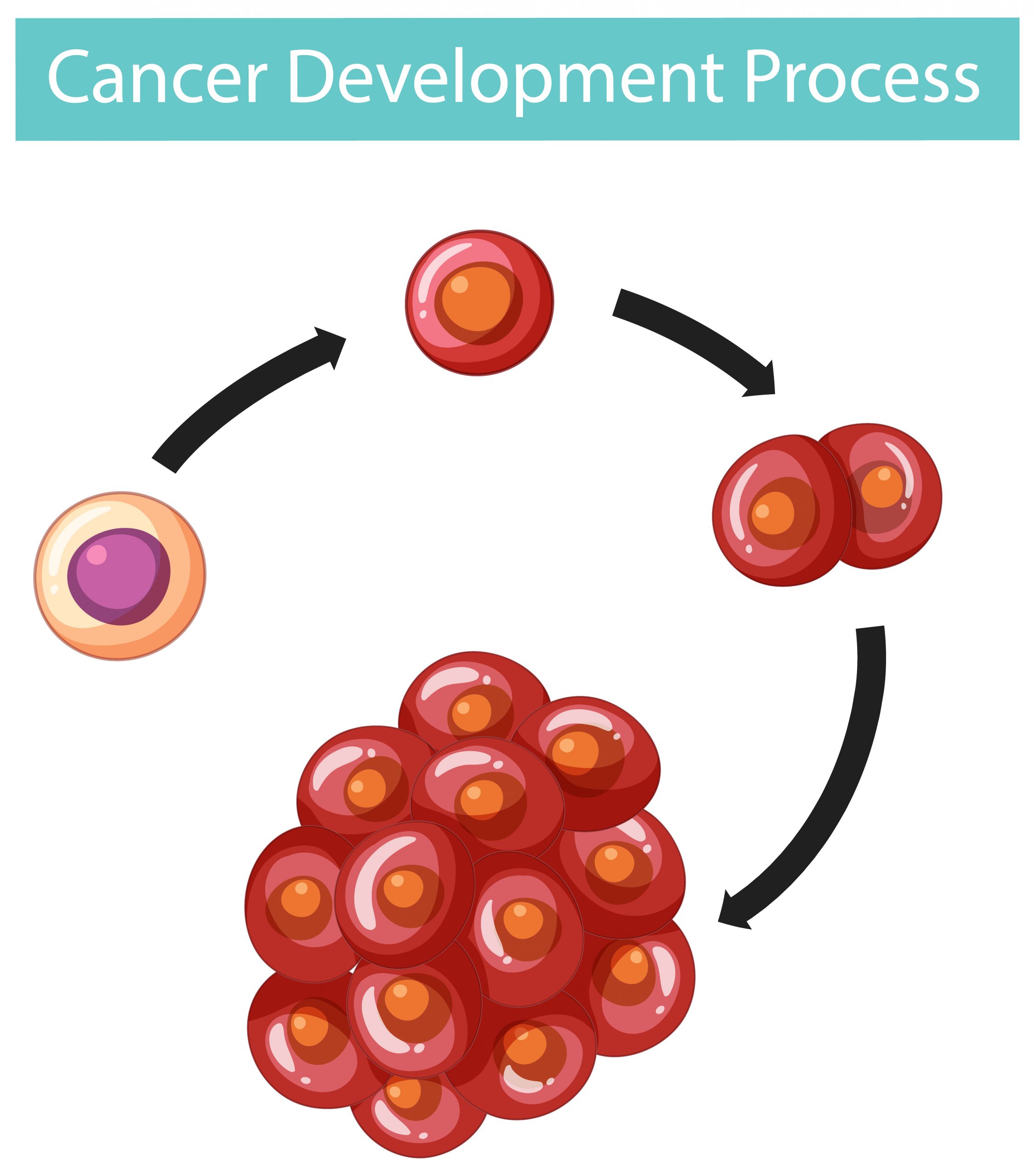
Image by brgfx on Freepik

Traditionally, the projected course of a patient’s cancer prognosis has been determined by its kind, stage, and microscopic aggressiveness, although patients with the same presentation might nonetheless have significantly disparate outcomes. Vanderbilt-Ingram Cancer Center researchers showed that changes in tumor mutation burden are a primary cause of this divergence.
The study, which was published in JCO Precision Oncology, discovered that mutation burden is a key predictor of survival, regardless of the clinical presentation measures currently in use. According to the researchers, mutational indices can be “used to predict disease course as effectively as (cancer) stage or grade.”
“A major insight of the study was the observation that survival was better at both low and high extremes of tumor mutation burden,” said the study’s corresponding author, William Dupont, Ph.D., professor of Biostatistics, Health Policy, and Preventive Medicine at Vanderbilt University Medical Center.
The study looked at the Pan-Cancer Atlas, which included 10,652 patents and 32 cancer kinds. Prior studies either examined models based on the incorrect assumption of a linear relationship—that survivorship decreased with mutation burden—or separated patients into low and high mutation burden groups for comparison. The researchers used a different analytic approach and discovered that survival is worse in the middle of the mutation burden range.
The connection between mutation burden and survival revealed to be very substantial and clearly separated the survival outcomes even between two patients with same cancer kind, stage, and grade under modeling that instead accurately suited the real data.
“As a pathologist it is gratifying to see that the prognostic power of the microscope is enhanced by the genetic analysis of the cancer,” said study author Fritz Parl, MD, Ph.D., recently retired professor of Pathology, Microbiology, and Immunology. “The types of tumor mutations that proved to be predictive included pathogenic substitutions and insertion-deletions, as well as copy number alterations.”
The Food and Drug Administration has currently approved a high tumor mutation burden as an indication for the use of immunotherapies. In that context, the metric indicates neo-antigen burden, or how foreign a tumor seems to the patient’s immune system. However, because the Pan-Cancer Atlas data predates immunotherapies, this therapy development is not a factor in patients with high tumor mutation burdens living longer lives.
“The discovery reveals that measure of tumor mutation burden could have a far broader indication: stratifying patients at the time of initial treatment decisions—analogously to the traditional use of stage and grade,” said study author Jeffrey Smith, MD, Ph.D., associate professor of Medicine.
The study discovered that the burden of genome mutations is a major predictor of cancer outcome. The authors present a web-based application that doctors and researchers can use to make clinical trial design and patient care decisions.

 Gamma Oscillations Restored in Alzheimer’s Disease Mice
Key takeaways Researchers restored parvalbumin (PV).
 Coffee Consumption Linked to Lower Recurrent VTE Risk
Key points at a glance Study.
 Body Roundness Index Linked to Higher Heart Attack Risk
Key findings at a glance Study.
 Maternal Diet Fails to Reduce Infant Egg and Peanut Allergy
Key Points A large Australian randomized.
 Visual Impairment Linked to Higher Dementia Risk
Key findings at a glance A.
 Long-Acting HIV Treatment May Help Drug-Resistant Cases
Key Takeaways A UCSF study found.
 Night Shift Work Alters Key Circadian Gene Expression
A recent study published in Frontiers.
 Tirzepatide Weight Loss: Fat Mass and Muscle Findings
Key points Tirzepatide was associated with.
 Coffee and Gut Microbiome: Brewing and Metabolic Effects
Key Points Coffee contains caffeine, chlorogenic.
 Low-Dose Radiation Therapy Shows Promise in Early Knee OA
Key Points Low-dose radiation therapy was.
Leave a Comment