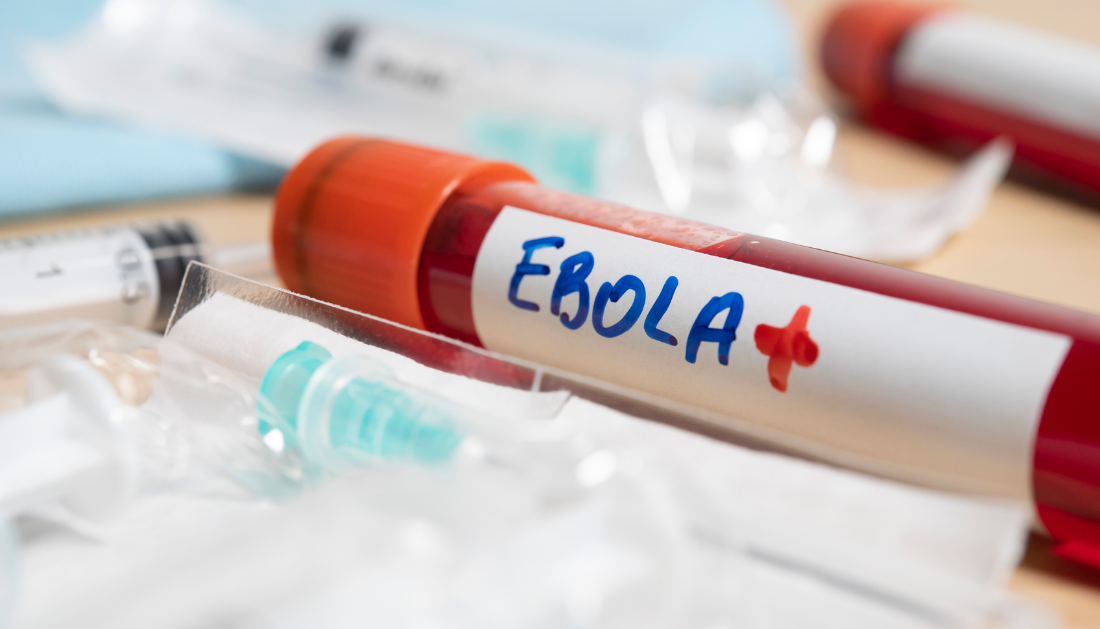
DRC Ebola Outbreak Prompts WHO Public Health Emergency

The World Health Organization has officially declared the ongoing Ebola disease outbreak caused by Bundibugyo virus in the Democratic Republic of the Congo (DRC) and Uganda a Public Health Emergency of International Concern (PHEIC) under the International Health Regulations (2005). However, WHO clarified that the outbreak does not currently meet the criteria for a pandemic emergency.
The declaration follows rapidly increasing reports of suspected and confirmed Bundibugyo virus disease (BVD) cases across Ituri Province in eastern DRC. Health authorities have confirmed eight Ebola cases and documented 246 suspected infections alongside 80 suspected deaths across Bunia, Rwampara, and Mongbwalu health zones.
Concern intensified after Uganda reported two laboratory-confirmed Ebola cases in Kampala within 24 hours. Both patients had recently traveled from DRC and required intensive care treatment, highlighting the risk of cross-border transmission.
WHO officials stated that the outbreak remains difficult to fully assess because of incomplete epidemiological links, underreporting, and limited surveillance capacity in affected regions. Healthcare-associated transmission is also raising alarms after at least four healthcare workers reportedly died with symptoms consistent with viral hemorrhagic fever.
Healthcare professionals and infectious disease experts are paying close attention to this outbreak because the Bundibugyo virus differs significantly from the more familiar Ebola-Zaire strain. Currently, no approved Bundibugyo virus-specific vaccines or therapeutics are available, making supportive clinical care and infection prevention measures essential.
WHO warned that the outbreak could be substantially larger than currently documented. Early laboratory testing revealed a high positivity rate, with eight positive results among 13 samples collected from different areas of Ituri Province.
Several factors are increasing the regional threat level, including:
WHO has urged affected countries to strengthen surveillance, laboratory testing, contact tracing, healthcare worker protection, and community engagement. The organization also recommended postponing mass gatherings until transmission is controlled.
WHO advised neighboring countries to rapidly strengthen preparedness systems, especially along land borders with DRC and Uganda. Recommendations include enhanced screening, rapid response teams, active surveillance, and healthcare worker training on infection prevention and control.
Importantly, WHO advised against international travel bans or border closures, stating that such restrictions often disrupt response operations and encourage unmonitored population movement.
Healthcare facilities have also been urged to establish dedicated isolation units and improve access to intensive supportive care for suspected Ebola patients. WHO further emphasized the urgent need for clinical trials to accelerate the development of Bundibugyo virus vaccines and therapeutics.
The outbreak continues to highlight the importance of coordinated international public health action, especially in regions facing humanitarian crises and healthcare system challenges.

 Long-Acting HIV Treatment May Help Drug-Resistant Cases
Key Takeaways A UCSF study found.
 Tirzepatide Weight Loss: Fat Mass and Muscle Findings
Key points Tirzepatide was associated with.
 Coffee and Gut Microbiome: Brewing and Metabolic Effects
Key Points Coffee contains caffeine, chlorogenic.
 Low-Dose Radiation Therapy Shows Promise in Early Knee OA
Key Points Low-dose radiation therapy was.
 GLP-1 Health Information: Quality, Completeness, & Engagement
Key Points A study assessed 128.
 DNA Damage Response May Drive Biological Aging
Key Points Chronic DNA damage response.
 Dietary Polyphenol Intake Associated With Lower MCI Odds
Key Points Older adults without mild.
 Psychedelic-Assisted Psychotherapy: Music in Treatment
Key Takeaways Psychedelic-assisted psychotherapy combines psychedelic.
 Cardiovascular Frailty Links Heart Health and Aging
Key Points Cardiovascular frailty may connect.
 Laser Blended Vision: Simple Test Predicts Success
Key Points A simple phoropter-based test.
Leave a Comment