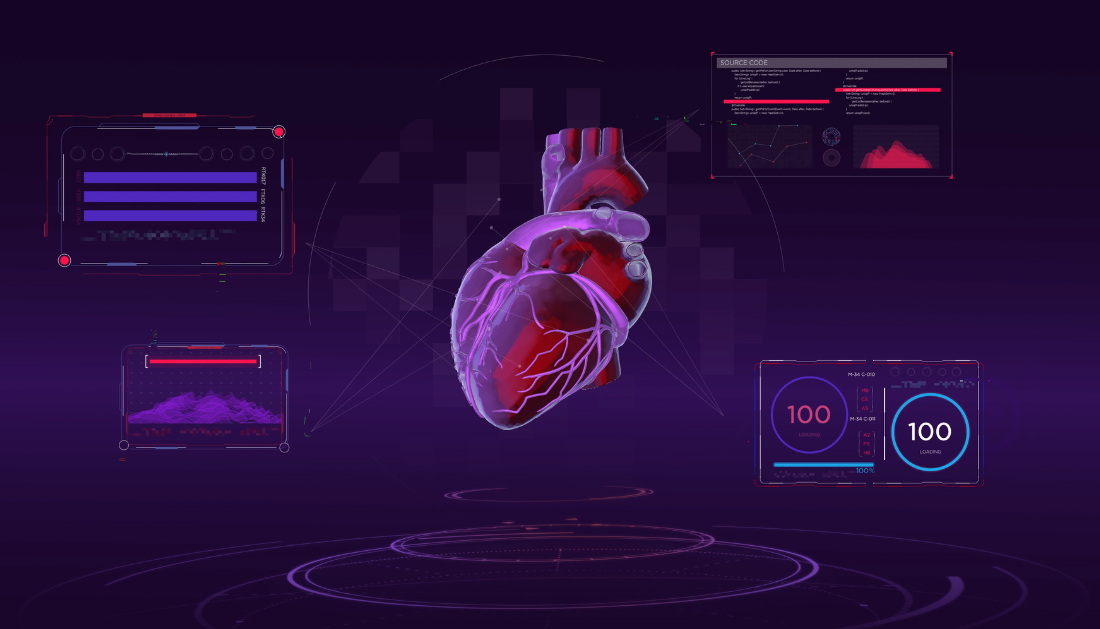
Digital Heart Twins Improve Atrial Fibrillation Treatment Planning

Atrial fibrillation (AF), the most common sustained cardiac arrhythmia, affects millions worldwide and remains a leading contributor to stroke, heart failure, and hospitalization. While catheter ablation has become a cornerstone therapy for persistent AF, treatment outcomes vary significantly among patients. New research suggests that personalized digital heart twins may help clinicians identify optimal treatment targets and improve procedural planning.
Researchers from Queen Mary University of London and collaborating institutions have developed patient-specific digital models designed to simulate the electrical activity of individual hearts affected by atrial fibrillation. Published in the Journal of Physiology, the study highlights how the quality and type of clinical data used to create these virtual models can significantly influence their accuracy.
Ablation procedures aim to eliminate abnormal electrical pathways that sustain AF by applying heat or cold energy to targeted cardiac tissue. However, persistent atrial fibrillation often involves widespread electrical remodeling that can be difficult to identify during a single procedure. As a result, repeat ablations are frequently required.
To address this challenge, investigators created detailed three-dimensional digital heart twins for nine patients. Each model was calibrated using three different clinical data sources:
The objective was to determine which data source most accurately identified the electrical circuits responsible for sustaining atrial fibrillation.
The findings demonstrated that electrical mapping data consistently identified more and often different ablation targets compared with MRI-based models alone. This suggests that structural imaging may not fully capture the complex electrical abnormalities underlying persistent AF.
Researchers found that voltage mapping and conduction velocity measurements provided complementary insights into the arrhythmia substrate. By integrating these datasets, clinicians may gain a more comprehensive understanding of patient-specific disease mechanisms.
Lead investigator Dr. Mahmoud Ehnesh noted that each data source captures a distinct aspect of atrial fibrillation behavior. Consequently, relying on a single modality could leave critical information undiscovered during treatment planning.
The study supports the development of hybrid digital heart twins that combine MRI imaging, voltage mapping, and conduction velocity data within a unified computational framework. Such models could help electrophysiologists predict treatment outcomes, identify optimal ablation sites, and potentially reduce repeat procedures.
Although digital heart twin technology is not yet part of routine clinical practice, the research establishes an important scientific foundation for personalized AF management. For cardiologists, electrophysiologists, nurses, and cardiovascular care teams, these findings highlight the growing role of computational medicine and precision cardiology in shaping future arrhythmia treatment strategies.
As researchers continue refining these models, digital heart twins may become a valuable clinical decision-support tool, helping healthcare professionals deliver more targeted and effective care for patients with persistent atrial fibrillation.

 Gamma Oscillations Restored in Alzheimer’s Disease Mice
Key takeaways Researchers restored parvalbumin (PV).
 Coffee Consumption Linked to Lower Recurrent VTE Risk
Key points at a glance Study.
 Body Roundness Index Linked to Higher Heart Attack Risk
Key findings at a glance Study.
 Maternal Diet Fails to Reduce Infant Egg and Peanut Allergy
Key Points A large Australian randomized.
 Visual Impairment Linked to Higher Dementia Risk
Key findings at a glance A.
 Long-Acting HIV Treatment May Help Drug-Resistant Cases
Key Takeaways A UCSF study found.
 Night Shift Work Alters Key Circadian Gene Expression
A recent study published in Frontiers.
 Tirzepatide Weight Loss: Fat Mass and Muscle Findings
Key points Tirzepatide was associated with.
 Coffee and Gut Microbiome: Brewing and Metabolic Effects
Key Points Coffee contains caffeine, chlorogenic.
 Low-Dose Radiation Therapy Shows Promise in Early Knee OA
Key Points Low-dose radiation therapy was.
Leave a Comment