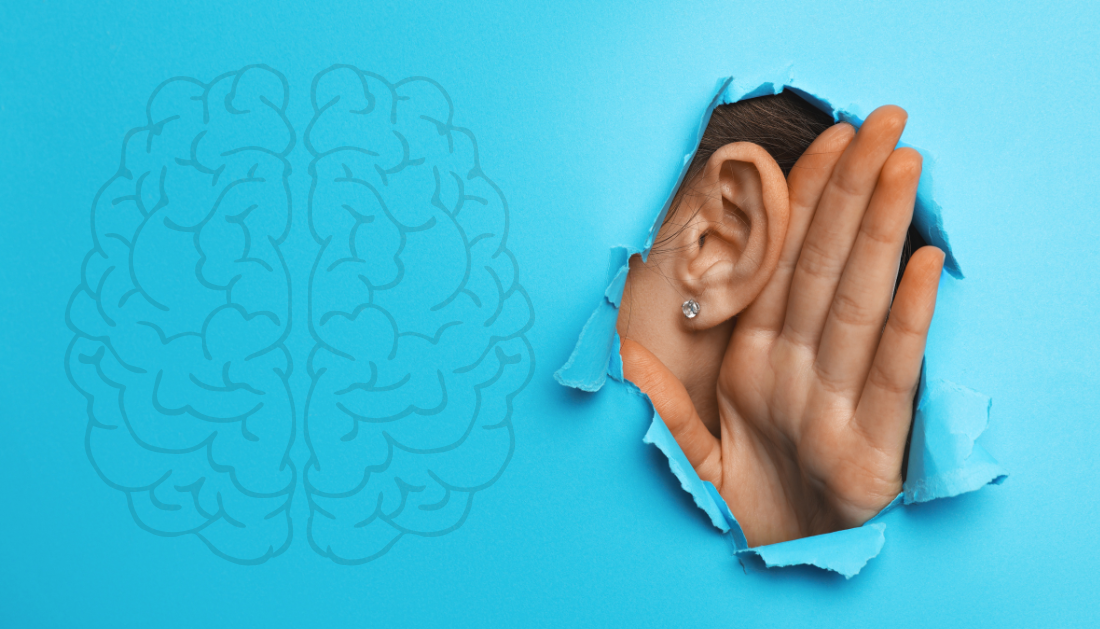
Study Maps Selective Attention to the Cortex

A recent collaborative study from the University of Michigan’s Kresge Hearing Research Institute and the University of Rochester reveals that selective attention, the ability to focus on one voice in a noisy environment, is a purely cortical function. Contrary to earlier assumptions, researchers found no evidence that the brainstem or auditory nerve modulates the sounds we choose to pay attention to.
Using cutting-edge experimental techniques and natural speech samples, the team tested how the brain processes sound under both diotic and dichotic listening conditions. Their findings show that only the auditory cortex amplifies signals of interest, essentially “turning up the volume” on the voice you’re listening to, while ignoring the rest.
“Subcortical parts of the auditory system respond to speech you’re paying attention to in the same way as speech you’re ignoring,”
explained Ross Maddox, Ph.D., Associate Professor of Otolaryngology at the University of Michigan.
For clinicians and audiology specialists, these results offer new clarity about speech-in-noise perception. Many hearing difficulties once attributed to peripheral damage may instead stem from cortical-level attention mechanisms. Understanding this distinction could reshape hearing aid algorithms, cochlear implant training, and central auditory rehabilitation programs.
Furthermore, by using continuous, real-speech stimuli rather than artificial tones, the study establishes a more realistic approach to assessing selective hearing. This model could inform future diagnostic protocols for patients with auditory attention disorders, especially in aging or cognitively impaired populations.
Researchers note that while current tools reveal no subcortical attention effect, the possibility of undetectable micro-neural activity remains open. As recording technologies improve, the next step may be uncovering how microcircuits cooperate with the cortex to fine-tune human listening.
For now, this study reinforces that selective attention—the brain’s internal spotlight—is powered primarily by cortical networks, redefining how both clinicians and researchers understand the auditory system’s hierarchy.
Source:

 Night Shift Work Alters Key Circadian Gene Expression
A recent study published in Frontiers.
 Tirzepatide Weight Loss: Fat Mass and Muscle Findings
Key points Tirzepatide was associated with.
 Coffee and Gut Microbiome: Brewing and Metabolic Effects
Key Points Coffee contains caffeine, chlorogenic.
 Low-Dose Radiation Therapy Shows Promise in Early Knee OA
Key Points Low-dose radiation therapy was.
 Oral Hormone Replacement Therapy Raises Blood Clot Risk
Key Points Oral hormone replacement therapy.
 GLP-1 Health Information: Quality, Completeness, & Engagement
Key Points A study assessed 128.
 DNA Damage Response May Drive Biological Aging
Key Points Chronic DNA damage response.
 Dietary Polyphenol Intake Associated With Lower MCI Odds
Key Points Older adults without mild.
 Maternal Diet Fails to Reduce Infant Egg and Peanut Allergy
Key Points A large Australian randomized.
 Psychedelic-Assisted Psychotherapy: Music in Treatment
Key Takeaways Psychedelic-assisted psychotherapy combines psychedelic.
Leave a Comment