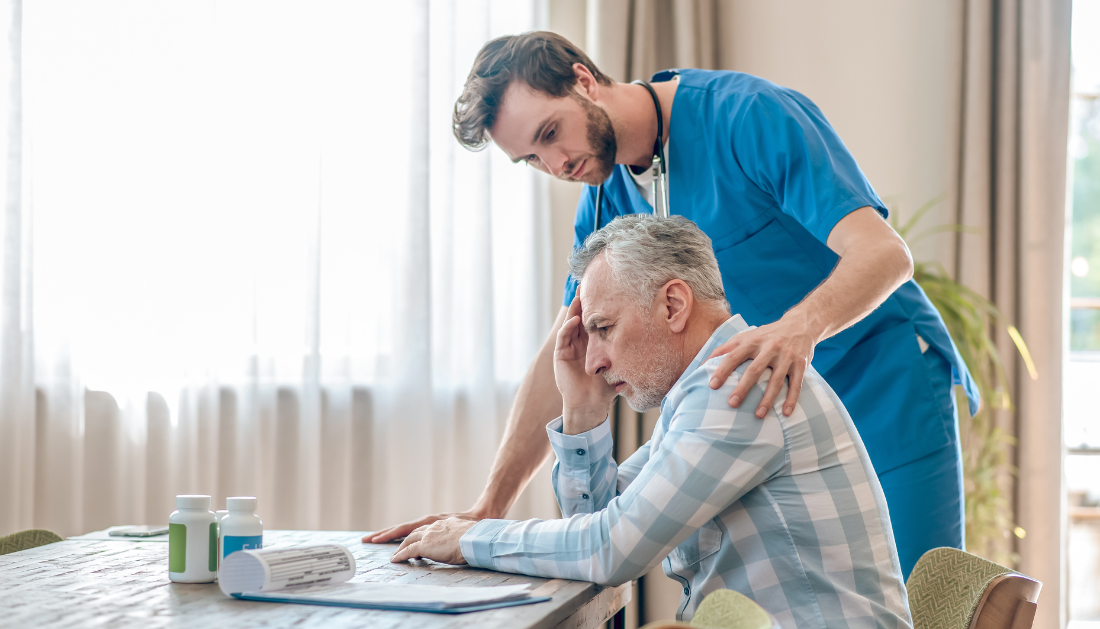
Study: Treatment-Resistant Depression in Older Adults.

According to UConn Health physician David Steffens, treatment-resistant depression in older people is difficult and frequently involves many therapies. His analysis in the New England Journal of Medicine provides doctors with evidence-based guidance on how to help depressed individuals who do not feel better on the first or second try.
According to the World Health Organization, depression affects approximately 5% of individuals globally. Treatment-resistant depression occurs when a person with depression fails to react to two separate therapies over the course of eight weeks.
“Estimates range widely that from 20-70% of people don’t respond to the first two treatments,” says David Steffens, past president of the American Association for Geriatric Psychiatry and current Chair of Psychiatry at UConn School of Medicine. “The general response rate to initial treatment is 30-40%, so a lot of people don’t fully respond at first,” and need to try various medicines and psychotherapy before finding a treatment that works, Steffens explains.
Steffens, who typically works with older patients over the age of 60, explains how doctors must thoroughly examine baseline depression symptoms in order to track improvement. The standard scale, the Patient Health Questionnaire-9 (PHQ-9), ranges from 0 to 27, measuring a person’s level of depression based on their responses to questions such as whether they have a bad mood, decreased energy, and a loss of interest in previously enjoyable activities. Higher scores indicate worsening depression.
The type of a patient’s symptoms should also impact the selection of antidepressants. Some depressed people have insomnia and agitation; their pharmaceutical regimen would differ from that of a patient who sleeps virtually constantly and finds it difficult to motivate themselves to do anything.
Other depressed people experience chronic pain, and antidepressant drugs that have been shown to relieve pain are likely to be beneficial to such patients. Coping skills for pain relief are also beneficial.
Steffens further points out that using two different antidepressant medications at the same time can help those with more severe forms of treatment-resistant depression. With modest but continuous dose increases, older people may typically tolerate the same therapeutic dose of antidepressants as younger ones; thus, physicians should not be hesitant to mix two medicines or raise the dose if necessary.
“Depression is really a serious problem in older adults, not only because it affects mood and interest in being in the world, but also because it can greatly affect the person as a whole,” by impacting how they manage their medical illnesses, particularly vascular disorders, Steffens says. Depression can raise the risk of heart disease in general and increase the likelihood of dying from a heart attack. However, adequate treatment can make a significant difference.
“Depression is not a normal part of aging. Nothing could be further from the truth.”
More information: David C. Steffens et al, Treatment-Resistant Depression in Older Adults, New England Journal of Medicine (2024). DOI: 10.1056/NEJMcp2305428

 Long-Acting HIV Treatment May Help Drug-Resistant Cases
Key Takeaways A UCSF study found.
 Night Shift Work Alters Key Circadian Gene Expression
A recent study published in Frontiers.
 Tirzepatide Weight Loss: Fat Mass and Muscle Findings
Key points Tirzepatide was associated with.
 Coffee and Gut Microbiome: Brewing and Metabolic Effects
Key Points Coffee contains caffeine, chlorogenic.
 Low-Dose Radiation Therapy Shows Promise in Early Knee OA
Key Points Low-dose radiation therapy was.
 Oral Hormone Replacement Therapy Raises Blood Clot Risk
Key Points Oral hormone replacement therapy.
 GLP-1 Health Information: Quality, Completeness, & Engagement
Key Points A study assessed 128.
 DNA Damage Response May Drive Biological Aging
Key Points Chronic DNA damage response.
 Maternal Diet Fails to Reduce Infant Egg and Peanut Allergy
Key Points A large Australian randomized.
 Psychedelic-Assisted Psychotherapy: Music in Treatment
Key Takeaways Psychedelic-assisted psychotherapy combines psychedelic.
Leave a Comment