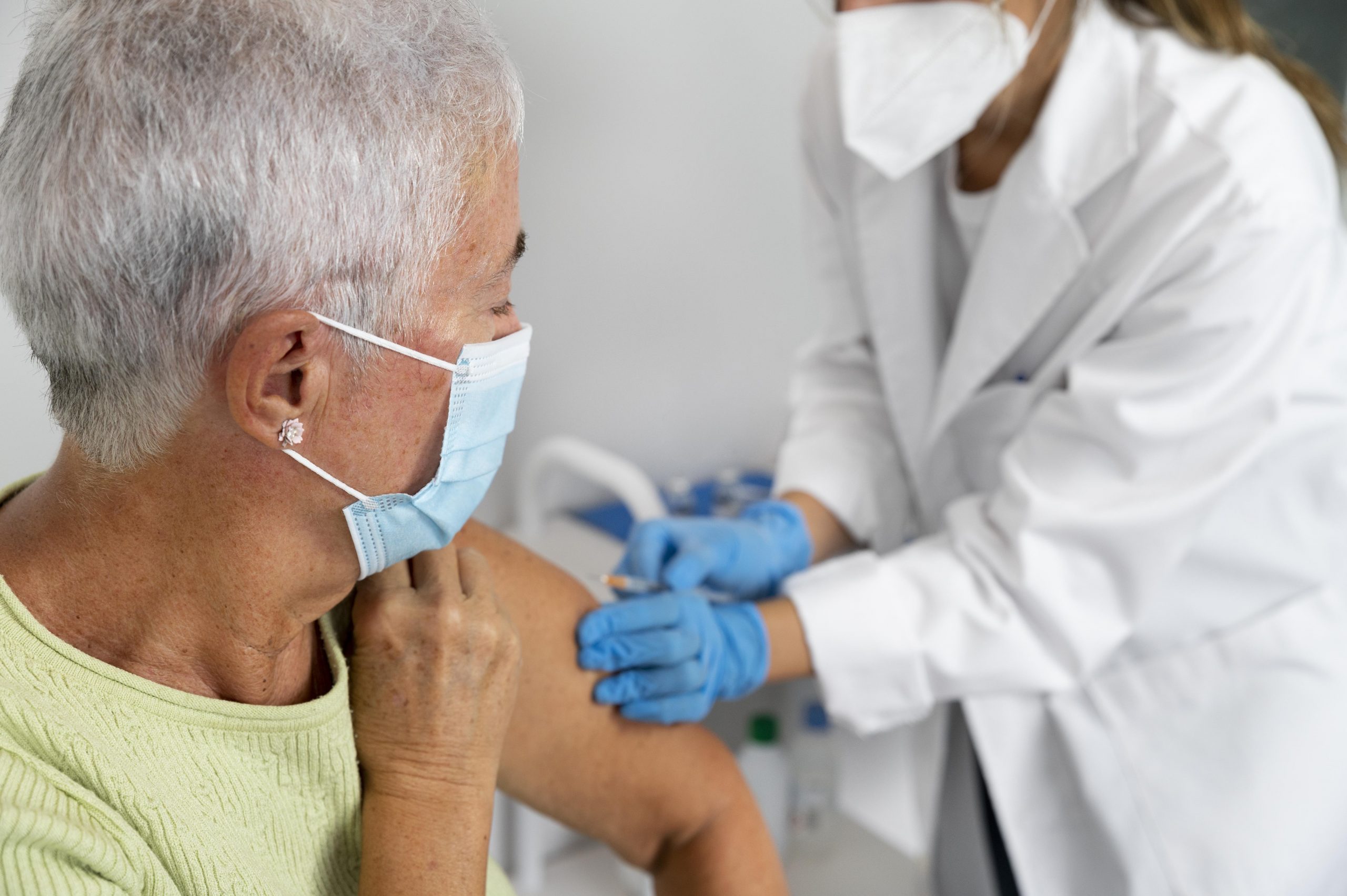
Image by Freepik

Arexvy, the first respiratory syncytial virus (RSV) vaccine approved for use in the United States, has been approved by the Food and Drug Administration. Arexvy is licensed for the prevention of RSV-related lower respiratory tract illness in those aged 60 and up.
“Older adults, in particular those with underlying health conditions, such as heart or lung disease or weakened immune systems, are at high risk for severe disease caused by RSV,” said Peter Marks, M.D., Ph.D., director of the FDA’s Center for Biologics Evaluation and Research. “Today’s approval of the first RSV vaccine is an important public health achievement to prevent a disease which can be life-threatening and reflects the FDA’s continued commitment to facilitating the development of safe and effective vaccines for use in the United States.”
RSV is a highly contagious virus that infects the lungs and breathing passageways in people of all ages. RSV circulation is seasonal, peaking in the fall and ending in the winter. RSV is a major cause of lower respiratory tract disease (LRTD) in older persons, affecting the lungs and causing potentially fatal pneumonia and bronchiolitis (swelling of the small airway channels in the lungs). According to the Centers for Disease Control and Prevention, RSV causes roughly 60,000-120,000 hospitalizations and 6,000-10,000 deaths among persons 65 and older in the United States each year.
Arexvy’s safety and effectiveness are based on an FDA examination of data from an ongoing, randomized, placebo-controlled clinical research in adults 60 years of age and older in the United States and abroad. Arexvy’s major clinical research was meant to evaluate the safety and effectiveness of a single dose provided to people aged 60 and over. Participants will be enrolled in the trial for three RSV seasons to determine the duration of effectiveness as well as the safety and efficacy of repeat immunization. The FDA was able to analyze data for a single dose of Arexvy from the study’s first RSV season.
In this study, roughly 12,500 subjects were given Arexvy, RSV vaccine and 12,500 received a placebo. The vaccination significantly reduced the risk of getting RSV-associated LRTD by 82.6% and the risk of developing severe RSV-associated LRTD by 94.1% among participants who got Arexvy and those who received a placebo.
Individuals who received Arexvy most typically experienced injection site pain, weariness, muscular pain, headache, and joint stiffness/pain among a subgroup of these clinical study participants. Atrial fibrillation was reported in 10 Arexvy-treated participants and 4 placebo-treated participants within 30 days of vaccination.
Arexvy was given to roughly 2,500 people aged 60 and up in two more studies. Two participants developed acute disseminated encephalomyelitis (ADEM), a rare type of inflammation that affects the brain and spinal cord, seven and 22 days after receiving Arexvy and the influenza vaccine in one of these studies, in which some participants received Arexvy concurrently with an FDA-approved influenza vaccine. One of the ADEM attendees passed away. In the other research, nine days after receiving Arexvy, one person developed Guillain-Barré syndrome (a rare illness in which the body’s immune system attacks nerve cells, producing muscle weakness and sometimes paralysis).
The FDA has ordered that the business do a postmarketing study to evaluate the indicators of significant risks for Guillain-Barré syndrome and ADEM. Furthermore, while not required by the FDA, the business has agreed to assessing atrial fibrillation in the postmarketing research.

 Coffee Consumption Linked to Lower Recurrent VTE Risk
Key points at a glance Study.
 Body Roundness Index Linked to Higher Heart Attack Risk
Key findings at a glance Study.
 Maternal Diet Fails to Reduce Infant Egg and Peanut Allergy
Key Points A large Australian randomized.
 Visual Impairment Linked to Higher Dementia Risk
Key findings at a glance A.
 Long-Acting HIV Treatment May Help Drug-Resistant Cases
Key Takeaways A UCSF study found.
 Night Shift Work Alters Key Circadian Gene Expression
A recent study published in Frontiers.
 Tirzepatide Weight Loss: Fat Mass and Muscle Findings
Key points Tirzepatide was associated with.
 Coffee and Gut Microbiome: Brewing and Metabolic Effects
Key Points Coffee contains caffeine, chlorogenic.
 Low-Dose Radiation Therapy Shows Promise in Early Knee OA
Key Points Low-dose radiation therapy was.
 Oral Hormone Replacement Therapy Raises Blood Clot Risk
Key Points Oral hormone replacement therapy.
Leave a Comment