
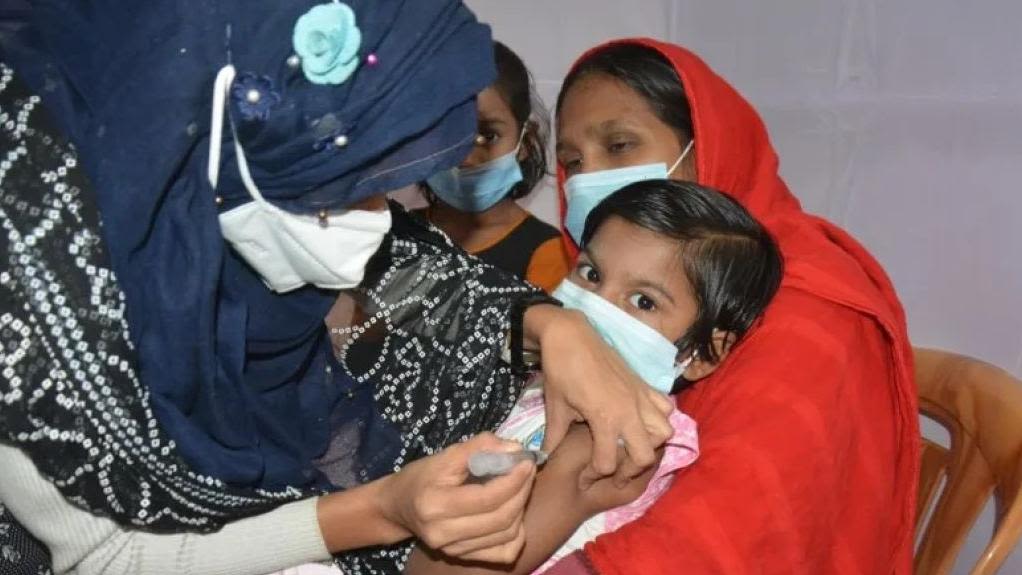
The TyVOID study, published in the Lancet, measured the effectiveness of a single dose TCV in Bangladeshi children over a five-year period and confirmed the high vaccine protection (80-96%) within two years of vaccination in all children.
Three to five years after vaccination, the study found a three-fold increase in typhoid incidence in children who received TCV in 2018/2019 and those who received it in 2021, suggesting a decline in vaccine effectiveness, most pronounced in the very young. The data suggested children vaccinated at two years or older were still well protected (59-85%) at 3-5 years post vaccination however, a more significant decline in protection was seen in children vaccinated at under two years of age, suggesting that a booster dose for these children might be needed for sustained protection.
Xinxue Liu, Associate Professor of Medical Statistics and Epidemiology at the Oxford Vaccine Group, and one of the senior authors of the study, said: ‘Typhoid is a serious and life-threatening enteric fever that remains a substantial public health issue for children and adolescents in low- and middle-income countries. TCV offers the best chance to reduce the burden of typhoid, helping to reduce transmission and limiting further evolution of drug-resistant strains. This study provides additional information for policy makers on longer-term TCV protection and the importance of continued investigation and updated guidance.’
Dr Firdausi Qadri, Senior Scientist at the Infectious Diseases Division at the International Centre for Diarrhoeal Disease Research, Bangladesh (icddr,b), and first author on the study, said: ‘This TyVOID study followed the original TyVAC cluster randomised controlled trial population for another two and a half years after unmasking in 2021. The results indicate a decay in antibody concentrations in different age groups and suggest that a booster dose around school entry age for children vaccinated while younger than 2 years could be considered, to sustain the protection from TCV through the school years when children are at greatest risk of typhoid.’
Read the full story on the University of Oxford website.

more recommended stories
 Gamma Oscillations Restored in Alzheimer’s Disease Mice
Key takeaways Researchers restored parvalbumin (PV).
 Coffee Consumption Linked to Lower Recurrent VTE Risk
Key points at a glance Study.
 Body Roundness Index Linked to Higher Heart Attack Risk
Key findings at a glance Study.
 Maternal Diet Fails to Reduce Infant Egg and Peanut Allergy
Key Points A large Australian randomized.
 Visual Impairment Linked to Higher Dementia Risk
Key findings at a glance A.
 Long-Acting HIV Treatment May Help Drug-Resistant Cases
Key Takeaways A UCSF study found.
 Night Shift Work Alters Key Circadian Gene Expression
A recent study published in Frontiers.
 Tirzepatide Weight Loss: Fat Mass and Muscle Findings
Key points Tirzepatide was associated with.
 Coffee and Gut Microbiome: Brewing and Metabolic Effects
Key Points Coffee contains caffeine, chlorogenic.
 Low-Dose Radiation Therapy Shows Promise in Early Knee OA
Key Points Low-dose radiation therapy was.
Leave a Comment